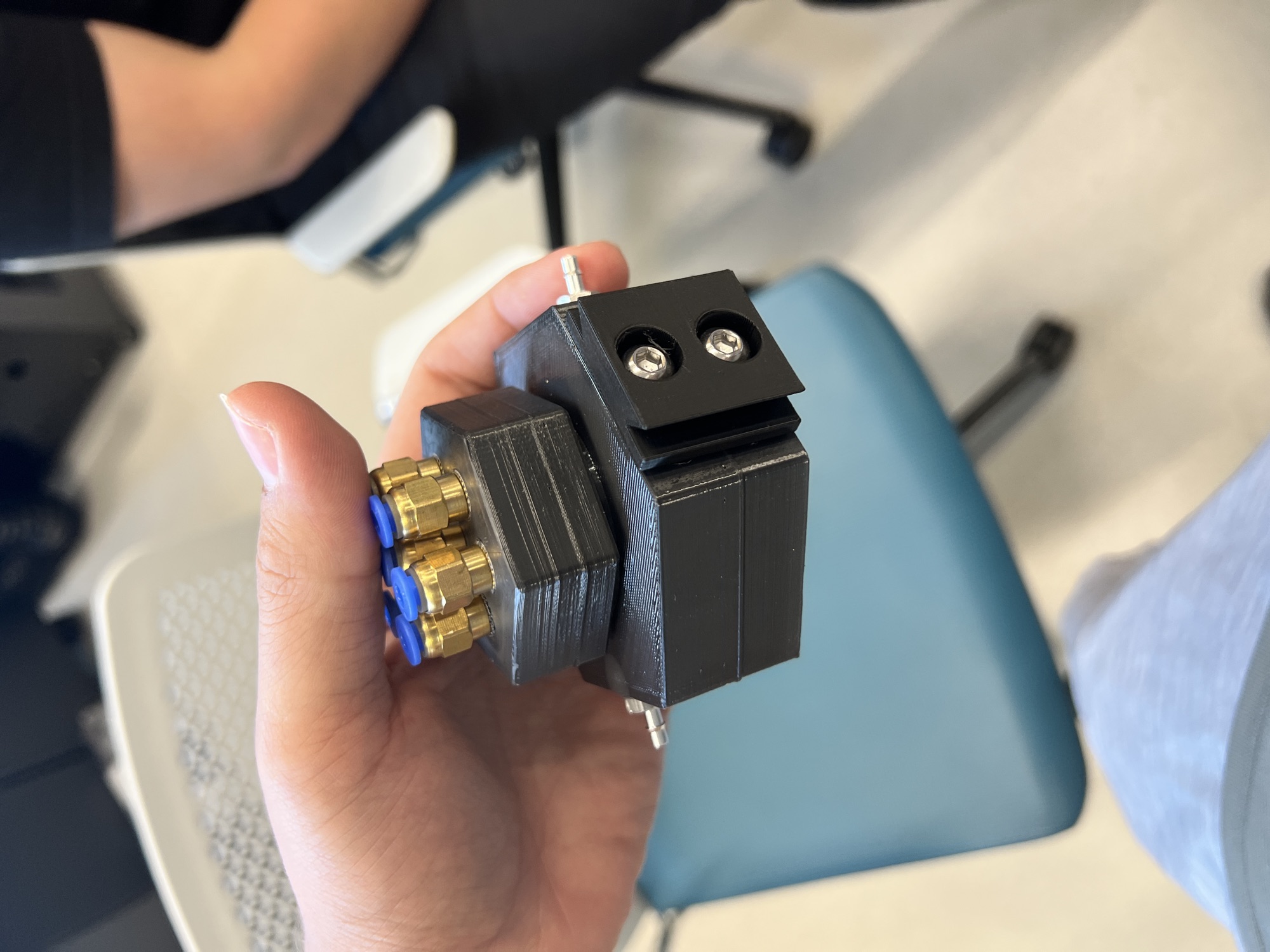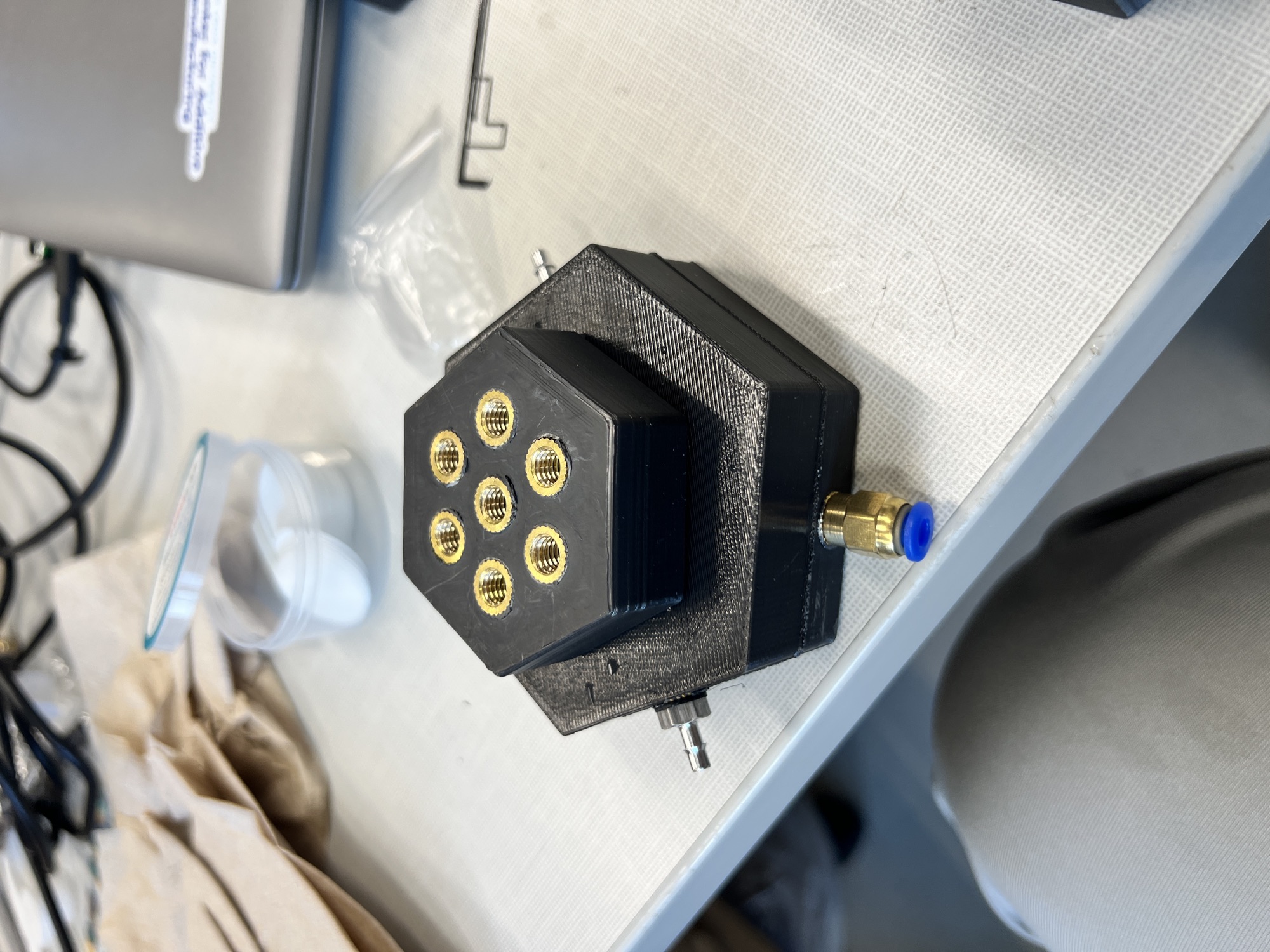
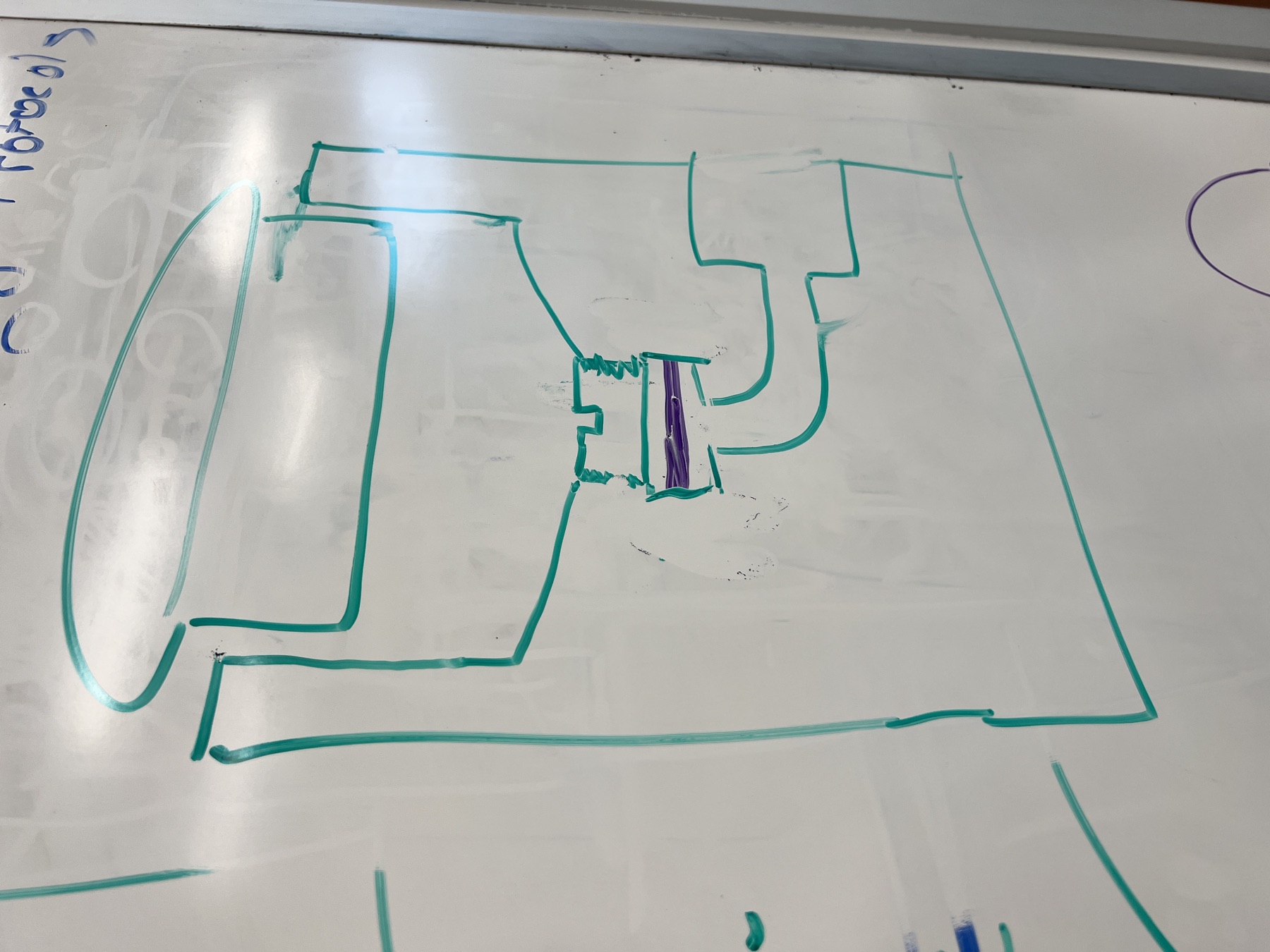
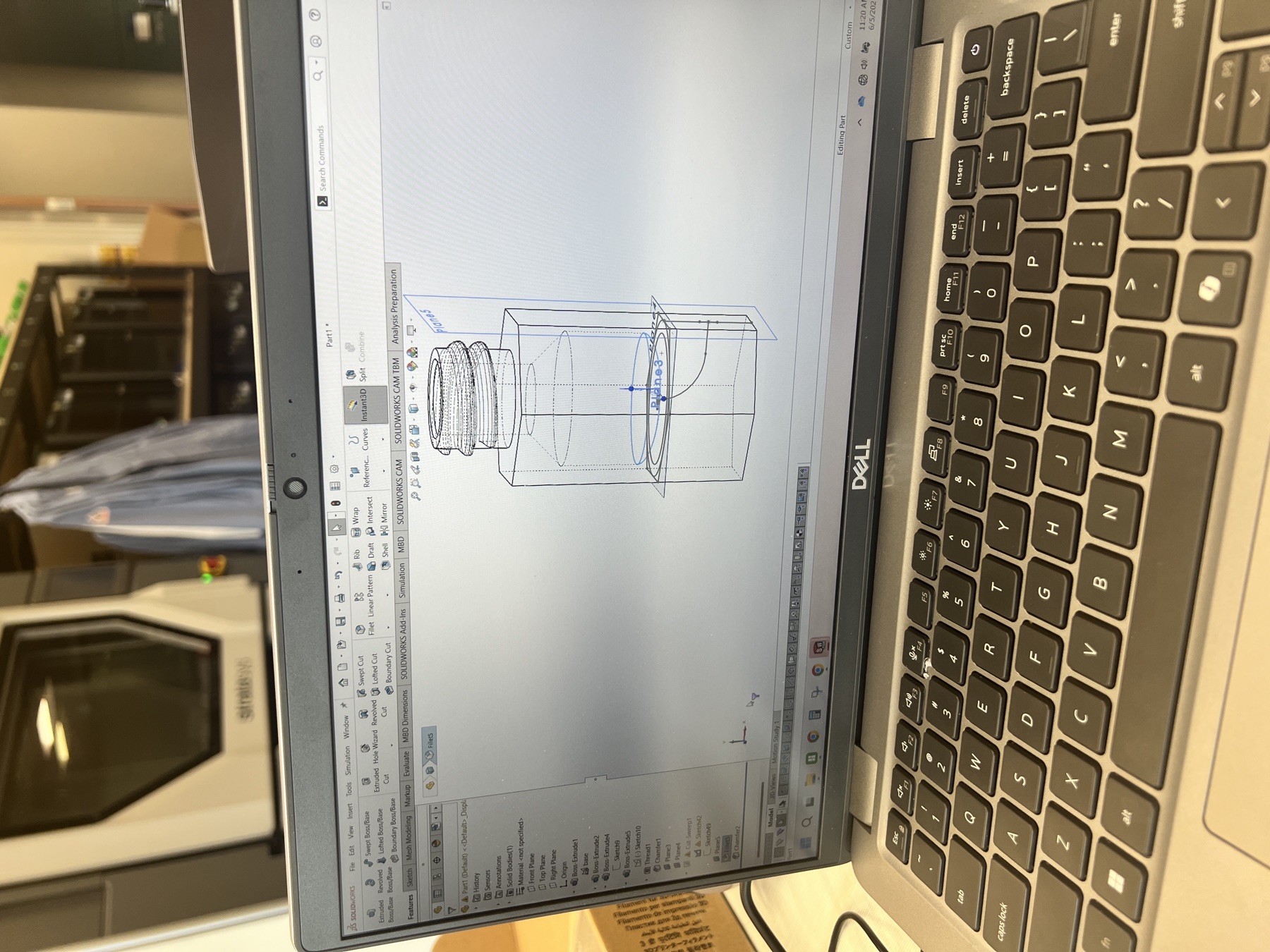
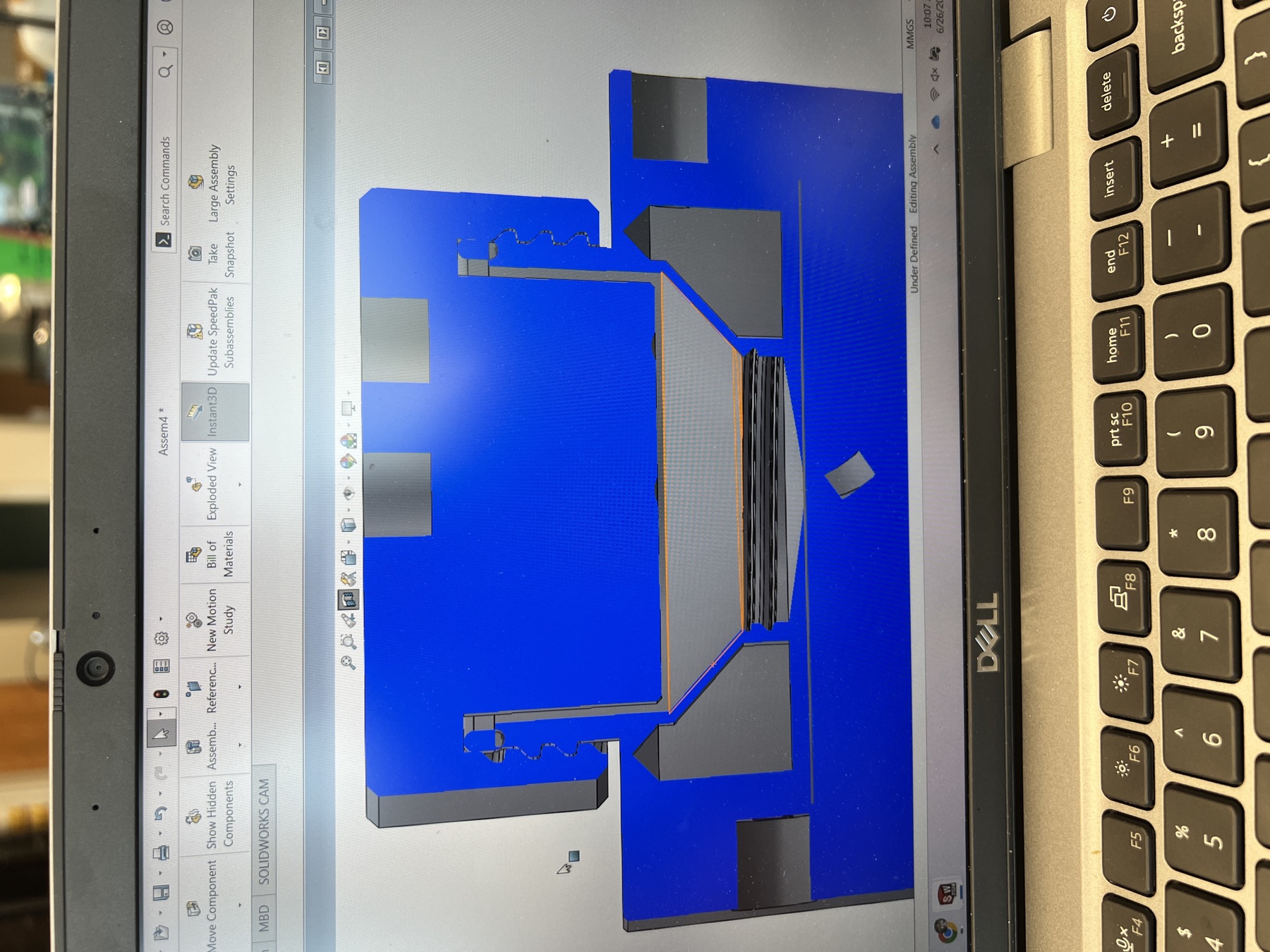
This was research at the SLU Center for Additive Manufacturing: an organic chemistry lab needed a way to automate a reaction, so I designed a custom chamber around it — pump inputs to feed reagents in, a filter output, and a vacuum output, all built into one printed part instead of a rig of fittings and tubing bolted together.
Why PPS
The chamber needed to hold up to the reaction itself — chemically resistant and stable at temperatures that would soften most printable plastics. PPS (polyphenylene sulfide) handles both, which is exactly why it's a pain to print.
Printing It
I printed the chamber on a Bambu P1S, which doesn't officially support PPS — its firmware caps the nozzle well below the temperature the material actually needs. I got around it by feeding the printer a modified thermistor reading, so it believed the nozzle was cooler than it really was and kept driving the heater past its normal ceiling. Not a supported workflow, but it printed.